
We Can’t Blame Devs for Scaling Back PC Ports – The Numbers Just Don’t Add Up
Ever since the Dark Souls petition proved there was real demand for PC ports, the narrative surrounding PC gaming has been simple: the audience is growing, the platform is booming, and publishers would be foolish not to chase it. On paper, that’s completely undeniable. With Steam continuously breaking concurrent user records, the rise of VTubers, and even handheld PCs pushing the format, computers are no longer seen just as a workstation that happens to run games.
Still, to this day, developers and publishers – specifically AAA ones – keep hesitating about making PC its primary platform. But once you start looking at the numbers more closely, it becomes much harder to blame them for becoming more cautious about PC ports.
Are Major Players Shifting Priorities?
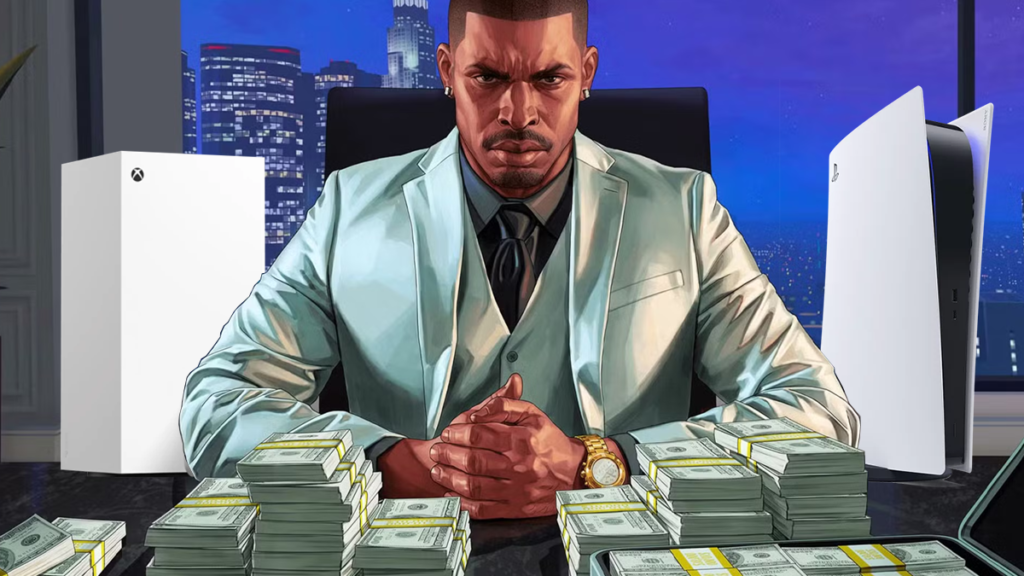
Take Take-Two and Rockstar’s handling of Grand Theft Auto 6, for example. They have said that the PC version will launch at a later date, which raised eyebrows for many of its fans. But recent leaked GTA Online financial data paints a clearer picture.
According to those figures, PC contributes the tiniest fraction of the game’s revenue – roughly $264,000 weekly – and accounts for just around 3% of its total revenue:
| Platform | Average Weekly Revenue | Average Weekly Active Users |
| PS5 | $4,486,346 | 3,474,021 |
| Xbox Series X | $1,867,947 | 1,129,023 |
| PS4 | $973,308 | 1,889,729 |
| Xbox One | $918,373 | 1,026,695 |
| PC | $264,273 | 894,621 |
That means PC doesn’t just earn less, it simply monetizes worse. Even with nearly 900,000 weekly players, it generates a fraction of the revenue consoles do per user. If you’re Take-Two, a company reportedly spending at least 1 billion on a single game, that’s a red alert. Why prioritize a platform that delivers the smallest return, especially if we put it in a launch scenario, when sales momentum matters most?
And when a company as influential as the one that makes GTA doesn’t just observe this, but acts on it, others will surely follow.
Reports already suggest Sony is scaling back parts of its PC strategy after ports underperformed expectations. That’s even though just a couple of years ago, PlayStation was aggressively pushing into PC, bringing major exclusives like God of War, Spider-Man, and The Last of Us to Steam. Now, the tone has shifted.
While there’s no official confirmation yet, rumors say that Marvel’s Wolverine, Ghost of Yotei, and Saros have completely ditched any ongoing PC ports. The only multiplatform games the company is going to publish are multiplayer or third-party ones like Marathon or Death Stranding 2.
Meanwhile, former PlayStation PC Planner & Insights Manager Jerry Liu revealed on his LinkedIn profile that he helped grow the company’s PC division from $0 to $300 million in net revenue between 2021 and mid-2023. That sounds impressive – until you compare it to PlayStation’s own ecosystem. During a similar period, the PlayStation Store revenue alone reportedly exceeded $800 million annually. That definitely put PC projects at a much smaller slice of the pie.
Then on the Xbox side, Microsoft is also signaling caution. “Along the way, we will reevaluate our approach to exclusivity […] and share more as we learn and decide,” wrote the new CEO Asha Sharma in a public company letter. Although it doesn’t directly reference PC, every platform still needs to justify its existence financially, even for a company as ecosystem-driven as Xbox.
Too Many Choices, Too Little Time

So what’s going on with the PC market? Didn’t I just say that it is going to overtake the console market? Well, we just have to look at the numbers.
One of the biggest issues is how revenue is distributed all over the PC market. According to coverages based on Newzoo’s 2026 report, around 56% of PC gaming revenue now comes from titles outside the ‘Top 20,’ which is dominated by names like Counter-Strike 2 at the top, followed by headliners such as Roblox, Fortnite, Call of Duty, and even Slay the Spire 2. The majority of spending instead comes from other, less popular-but-still-massively-profitable games like Warframe, War Thunder, Euro Truck Simulator 2, Stardew Valley, or Path of Exile.
That might sound like a healthy, diverse ecosystem – and honestly, it is, depending on your perspective. If you are an indie developer, that means you still have a chance to publish that breakout hit. If you’re making a live-service mobile social game, that means there’s a chance your fanbase would double-dip on PC. But for AAA publishers, that means it’s a red flag.
After all, on consoles, spending is still heavily concentrated around blockbuster titles that can afford to spend money on marketing and putting their games on shelves. Many of the users are also your ‘everyday gamers,’ who just want to blow off steam after a 9-5 job (not including commute) by playing something familiar like the yearly sports or military shooter franchise with the latest coat of paint.
On PC, however, revenue is far more fragmented as mentioned. You got the AAA – the Call of Duties, the Fortnites – then there are also the latest open-world anime game from China with too many minigames, or an addictive eyesore that 3 random college-aged friends made from scratch in their apartments. Even Roblox is just a platform containing thousands, if not millions, of experiences competing with each other.
PC players, young and old, are willing to spend on all of those genres. But they’re spreading their limited time and money across God knows how many digital interactive software out there.
Familiar Issues for PC Gamers
Then there are the classic PC issues that will never disappear.
First, unlike consoles’ locked platform, most PC hardware is modular and isn’t standardized. That means, not every newcomer to the PC userbase can instantly run a modern AAA game. Case in point, the whole Monster Hunter Wilds launch controversy. Runs fine, maybe with a bit of hiccup here and there on a PS5. On Steam? It’s Overly Negative all the way until its first anniversary.
Ironically, Newzoo shows that much of PC’s growth is being driven by Asia-Pacific and other emerging markets. The region alone accounts for around 53% of the global player base, while ‘less mature’ markets like Latin America and the Middle East are seeing the fastest growth. Those regions, however, have lower spending power compared to North America and Western Europe.
That report is supported by Valve’s Steam Hardware Survey, which shows the most common setups are mid-range or older GPUs like GTX 1060 on older CPUs running in 1080p. Like the mobile market, many would-be gamers rely on mid-to-low-end simply just to meet the bare minimum of required specs. That expands the audience in general – but not necessarily the paying audience for AAA games.
Speaking of a paying audience, it’s easy to argue that PC storefronts are built around discounts. Between Steam sales, GOG and Humble bundles, and third-party key markets, full-price purchases are harder to sustain compared to consoles’ more controlled ecosystems.
Last but not least, the ever-present shadow of piracy. Despite a European Commission study finding that there’s no consistent evidence that piracy directly reduces sales, perception matters to this very day. Ubisoft once controversially claimed that up to 95% of its PC users were pirating its games. Then, recently, reports said that all single-player games using Denuvo have been cracked wide open, forcing 2K to deploy mandatory online checks. All of these, unfortunately, reinforced the idea that the platform remains harder to control.
So are AAAs Leaving PC?
None of this means PC gaming is struggling. In fact, as I mentioned above, it’s totally the opposite. The platform keeps growing year-on-year, revenues are increasing despite hardware price fluctuating, and analysts expect it to eventually surpass consoles. And to be fair, there are still AAA developers who insist the multiplatform approach works.
In its 2023 corporate report, Capcom said it aims for PC to account for 50% of its sales, where Monster Hunter and Resident Evil have both seen strong performance. Former PlayStation executive Shuhei Yoshida has also defended PC releases, suggesting that bringing games to PC allows publishers to generate additional revenue for funding future projects.
CDPR, too, has repeatedly emphasized PC as a core platform. During Cyberpunk 2077’s launch, the company stated PC accounted for around 59% of its total pre-orders. It also called that PC is a ‘very important and profitable’ platform.
But their cases feel like the exception, not the rule. Between delayed PC versions and studios pulling back on ports, none of these moves exists in isolation; they’re simply similar responses to the same underlying ‘issue.’ PC isn’t a struggling platform, it’s just become a very complicated one to break through for AAA developers in recent years. For AAA publishers chasing predictable, high-margin returns, that complexity matters – a lot.
Market growth alone isn’t enough. What matters is where the money actually comes from – and how reliably you can capture it. So no, it’s that people stop spending money on PC games. Just that PC players have too many choices, and an $80 AAA game isn’t always the obvious pick.