
Every Numbered Armored Core Game (Ranked)
The Armored Core games may not be as popular as FromSoftware’s Soulslike games, but that doesn’t mean they’re any worse. In particular, the numbered Armored Core games are fan-favorites, primarily because most of them introduce a new feature or universe that switches things up.
While there are multiple mainline entries in the Armored Core series, only a handful of them are numbered. We’re here to discuss where all of the numbered Armored Core entries should be ranked on a list from worst to best.
6. Armored Core 5 (2012)
FromSoftware swapped dogfighting and quick boosts for cover-based combat and squad tactics in Order mode, and plenty of longtime fans never made peace with the change. Single-player mode plays less like a campaign and more like a tutorial for systems designed for multiplayer.
The story suffers for it, thinning out well before the credits roll. Territory management is the clearest example of the disconnect. It introduces genuine strategic depth, but that depth is spent managing supply lines and faction standing instead of piloting anything.
5. Armored Core (1997)
Everything traces back to this one. The frame rate stutters at any real enemy approaching, the camera fights the player at every turn, and the load times between missions demand patience by modern standards.
However, none of that erases what the game set out to do. It handed players a garage full of interchangeable parts and let them build a machine that reflected their own approach to combat, then they had to live with whatever came of that process. The bones of the whole franchise are already recognizable here. Most people return to it now out of curiosity rather than because the mechanics have aged well.
4. Armored Core 2 (2000)
PlayStation 2 hardware gave the series room the original console never had, and the difference shows up within the first mission or two. Arenas grew several times larger, and draw distance stretched out enough that distant terrain was actually detailed. Missions finally felt like they took place somewhere real instead of behind a wall of fog.
Larger arenas and encounters against structures the size of small buildings simply hadn’t been possible on the previous hardware. Narrative content is minimal, and a few missions spike in difficulty without warning. However, the real value here lay in giving the franchise a mechanical reset, not in telling a story.
3. Armored Core 3 (2002)
Of everything released so far, Armored Core 3 pushes closest to a soft reboot. The game added a new focus on customization, letting pilots combine core frame parts in ways earlier entries simply didn’t support. The story of the ruling AI’s slow breakdown and the corporate warfare it unleashed gave the missions a clearer narrative thread than earlier entries had.
Part variety expanded well past anything the PS1 titles offered, and the arena ladder became a genuine test of build knowledge rather than raw reflexes. This is the entry where the series’ modern identity first takes shape.
2. Armored Core 4 (2006)
Primal Armor and a noticeably faster, more vertical style of combat pushed the series somewhere it had never gone. Quick boosting became a near-constant part of movement rather than an occasional escape option, allowing players to engage in high-speed aerial combat that the earlier games never allowed. The campaign runs short, arguably too short for its ambitions, and the story stays vague about faction motivations more often than it should.
Still, the way it feels to pilot an AC changed for good with this release. While the fifth game temporarily pivots away from this formula, the speed and responsiveness introduced here laid the foundation for the mechanics in Armored Core 6.
1. Armored Core 6: Fires of Rubicon (2023)
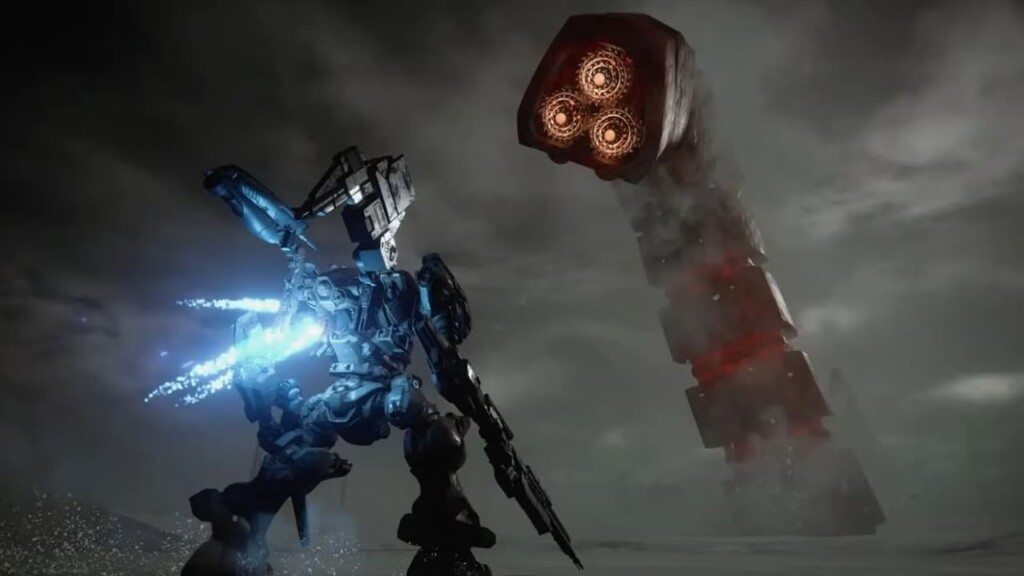
This is the entry where a decade of accumulated design finally pays off. FromSoftware brought over the boss-fight instincts it sharpened across ten years of Souls games, and the result is encounters built on pattern recognition instead of raw stat checks. It streamlined customization compared to earlier entries, removing the more tedious micromanagement aspects.
Missions swing from tight aerial duels to grinding tank battles to sprawling siege assault without settling into one rhythm. A new stagger mechanic also gives every fight a momentum the older games lacked. It’s an entry point that works for someone who’s never touched the series, and a payoff for anyone who’s been here since 1997.