
The Secret Studio Crafting the World’s Best Video Game Hair
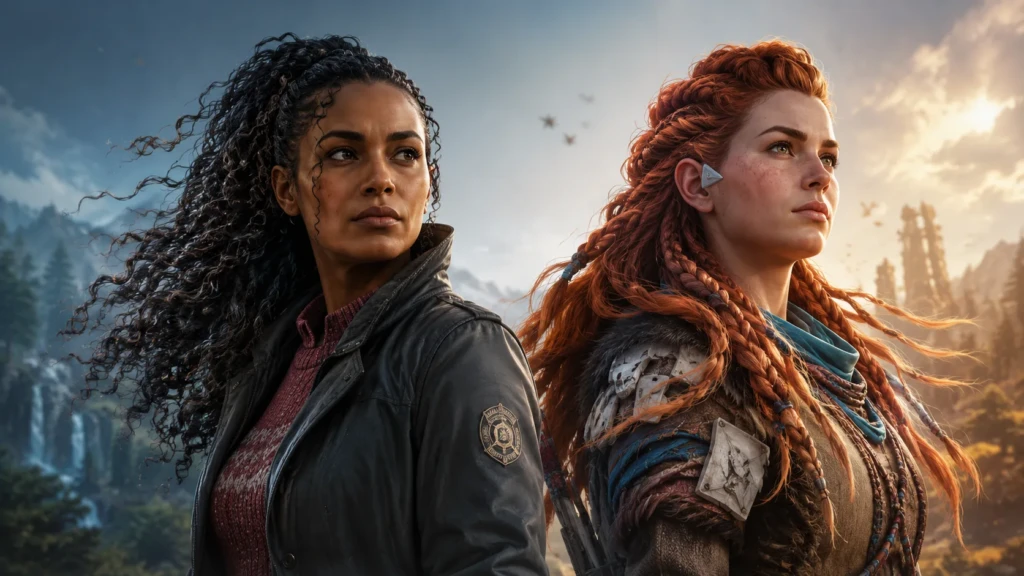
An in-game screenshot of Alan Wake 2 made the rounds on Twitter in early May, a close-up of protagonist Saga Anderson. The image was taken from behind, zoomed in, and cropped to emphasize the curls in her hair. “I hadn’t paid attention to the level of detail in Saga Anderson’s hair in Alan Wake 2,” the original poster wrote. “It’s really impressive.”
The games industry hires thousands of talented amateur and professional artists who design the costumes and hair that give your favourite video game heroes character. This is deeply creative work that decides the atmosphere and tone of a virtual world. No less important is putting those designs inside a game, getting the light to hit the hair just right or making sure jewelry and clothes have the appropriate weight and swing to them. Today, there are hundreds of boutique art studios whose entire purpose is to contribute to the character design pipeilne, whether that’s costumes, shoes, skin, hair, or jewelry. Yet, even among these elite studios, some stand out for their exceptional quality and knowledge.
For hair, when the big studios and AAA publishers need tip-top tresses (the cream of the crop cut) they go to a place most gamers wouldn’t expect. In the bustling heart of Hyderabad, India’s second-biggest tech hub, a digital art studio thrives, helmed by one of the world’s foremost digital hair specialists.
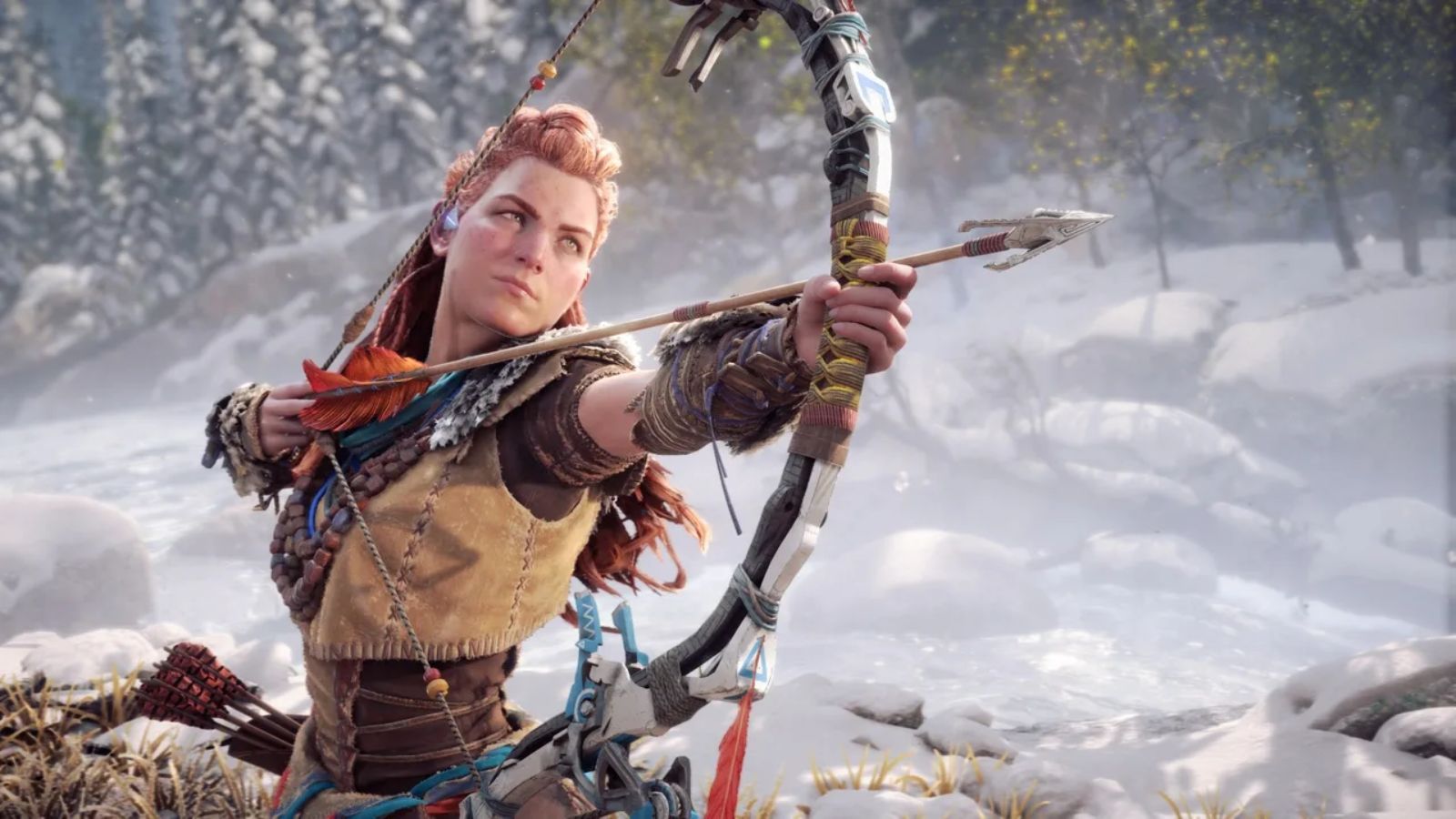
Little Red Zombies is an agile studio headquartered on the 9th floor of a sleek corporate office building in the center of Hyderabad’s IT corridor. Like many boutique studios, Little Red Zombies specialises in character design, but the company is world-renowned for its work on video game hair. The team’s most notable member is its lead Nakshatra ‘Naky’ Solanki, a young artist in his early 30s who is widely considered a master of hair for video games.
You may not have heard of Solanki or his team, but you’ve definitely seen their work. Veteran character artist Del Walker, formerly of Naughty Dog and current lead character artist at Absurd Ventures, says Solanki taught him “how to make hair for games.” “You’ve seen [Solanki’s] work either directly or have seen someone he trained personally to create hair at this quality,” Walker uploaded to Twitter in reply to the viral image of Saga Anderson.
Walker isn’t exaggerating. Just take a look at Little Red Zombies’ client list; it’s a who’s who of the world’s biggest game makers—Remedy, Naughty Dog, Infinity Ward, Remedy, Obsidian, Sucker Punch, Respawn. Almost all of Sony’s first-party flagship games in the past five years has involved Little Red Zombies in some capacity. But what is it about Solanki and his team that make them so sought-after in an industry steeped in artistic talent?
To put it simply: Solanki revolutionised the hair production workflow that is now standard in studios around the globe. But to better grasp his impact on video games and character design, we need to understand how hair in video games is made.
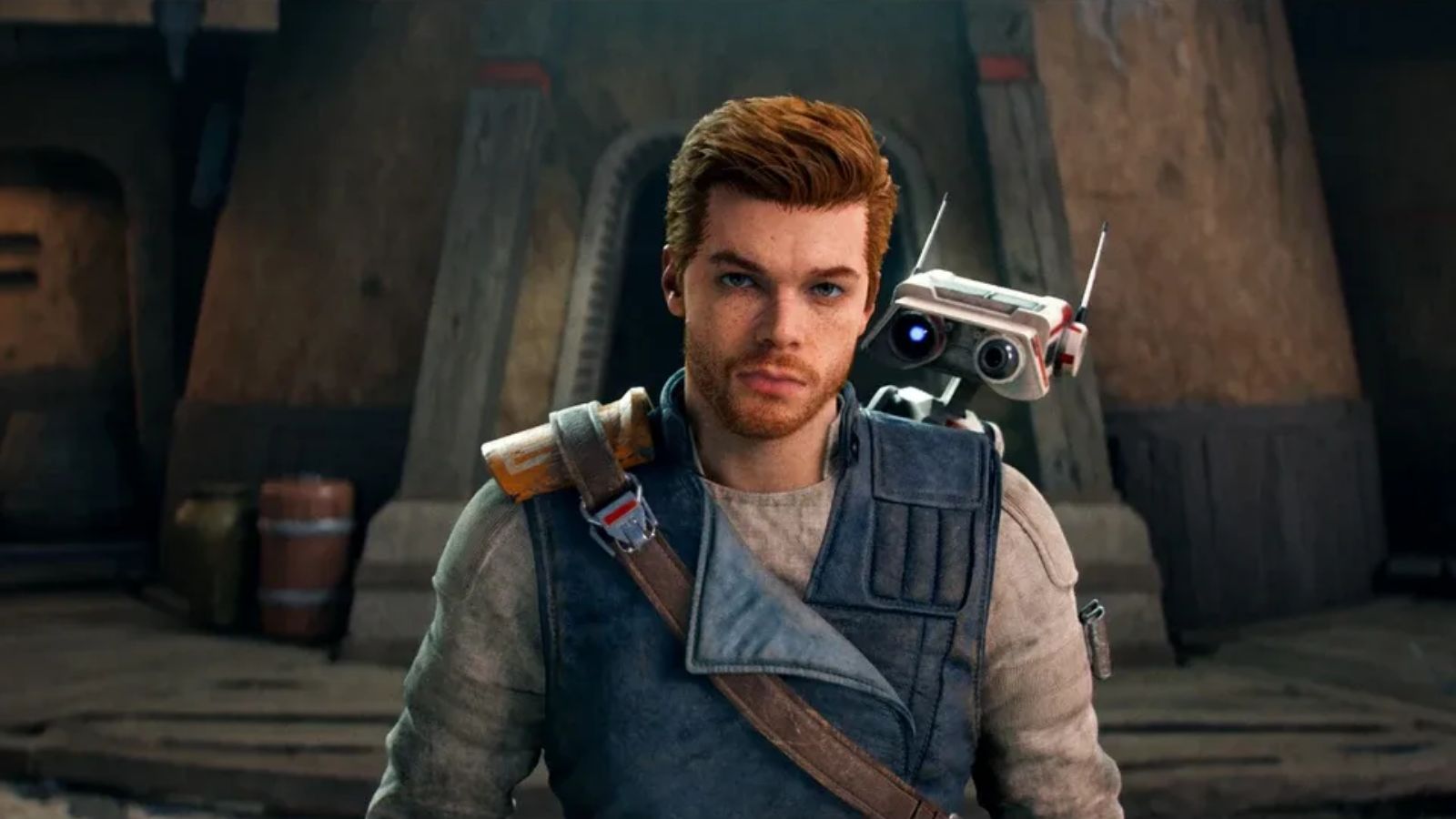
Vidal Sassoon once said the working of hair is “architecture with a human element.” Like architecture, great hair in video games is both a feat of engineering and a creative achievement. Thanks to optimised rendering techniques and advanced physics simulations, we’ve come a long way from the grass-like shoots that topped Sid Phillip’s head in the original Toy Story, but not all of those techniques can be applied to video games.
Film and VFX use what is called a ‘strand-based’ workflow. These revolve around particle-based systems and a process where tens of thousands of individual digital strands are procedurally generated or manually planted onto a character’s head. The artist can then ‘groom’ the hair, using a physics system to manipulate the weight and direction of the strands, much like a comb. The results from this process can be absolutely stunning. In a production pipeline, typically each strand of hair interacts with light and physics, resulting in beautiful, natural-looking hair that approaches photorealism. There’s a major downside, though. These complex calculations require lots of time and compute just to generate a single frame.
Such long render times are fine for TV and movies, where images only need to be generated once. Productions will account for the render times in their schedules, allowing weeks or even months for render farms to get each shot exactly right. For video games, that kind of time frame is absolutely unacceptable.
Video games are an interactive medium where a delay of a few milliseconds can break the experience. For many gamers, sixty frames per second is the minimum standard for playability. That’s one frame every 16 milliseconds—a world of difference from the typical rendering time for a frame in TV or film productions. Out of necessity, engineers and artists had to come up with ways to build convincing hair without taking up all of a machine’s processing power.
The most popular of these solutions is hair cards. Instead of planting and animating individual strands of hair, artists paint hair textures onto flat, card-like polygons. In a traditional card-based workflow, there is a single mesh for the main body of hair and several hair cards that hang off the edges. Each of these cards can be animated individually, allowing artists to replicate the effect of hair waving in a breeze or brushing a bang away from the face.
You can find examples of hair cards everywhere in video games, but it’s most obvious in older games from the PlayStation 2 era. In Metal Gear Solid 2, you can see the individual hair cards that make up Raiden’s bangs and the locks that hang off the back of his head. The effect is that the blond assassin appears to have long, wavy hair that sways as he moves.
The obvious benefit to hair cards is that they drastically cuts down on the compute cost of hair simulations. The downside is that hair cards typically look stiff and flat. That was acceptable in older console generations, when hair cards and animated hair were considered fairly cutting-edge technology. Such flat, simplistic hair wouldn’t fly in a modern big-budget production today. As technology has gotten more powerful, players’ rising graphic expectations meant conventional hair cards were in desperate need of an update.
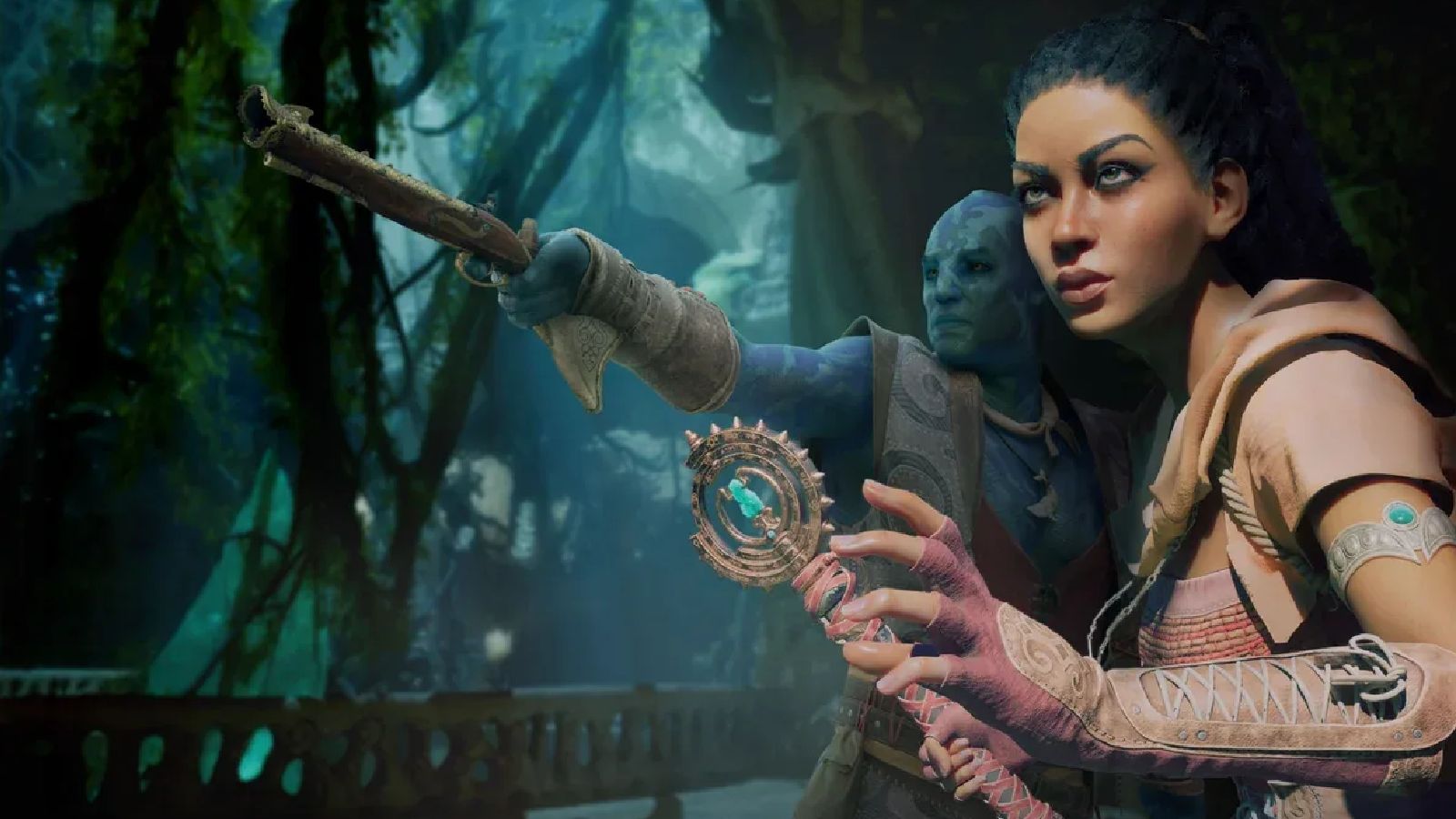
That update is exactly what Solanky provided. First, he revolutionised the workflow by combining manual and procedural generation tools. This made the entire process more efficient for artists while also allowing for the sort of ‘imperfections’ and asymmetry that make hair look natural. Second, he standardised how card-based hair is planned, designed, and implemented, turning it from a largely trial-and-error process into a clear, step-by-step methodical approach.
The innovation of Solanki’s method is that it allows for an optimised middle ground between the realism and detail of strand-based workflows and the performance savings from card-based hair.
He begins with high-quality, detailed reference photos, with an emphasis on understanding of the direction of the hair’s growth, root structure, and how it naturally clumps together.
Then he uses commercial 3D software to procedurally create the hair, much like artists would do in a strand-based workflow. In this step, he utilises modifiers to add curls, noise, and clumping to the hair mesh.
Once he’s satisfied with how the mesh looks, he gets rid of the heavy geometry. Using software, Solanki ‘bakes’ the high-poly hair mesh onto a flat 2D plane. This results in a number of texture maps that contain all the 3D data of the original mesh but stored as a sequence of 2D images.
This next step is the most critical in Solanki’s process. He returns to a more traditional, manual process, manually placing the hair cards on to the character’s head model. Solanki begins with a base layer of opaque cards to define the overall shape and volume of the hair. Then, he adds a layer of semi-transparent cards that add angles and flow to the overall hair silhouette. Finally, Solanki places the flyaway cards—thin, wispy details like stray hairs and frizz that make the hair look natural.
Once the hair’s overall shape is complete, he takes all the shadow data from the model and bakes it into the hair cards. This way, the engine doesn’t have to perform dynamic calculations on shadows in the hair, saving even more performance.
In the final step, Solanki brings the hair into the engine, where he can tweak the various 2D texture maps to ensure the final result looks like 3D volume.
Why go through all that effort to get great hair? How much could a character’s hair really matter in the grand scheme of things?
Your hair is a statement, whether you mean it to be or not. Unkempt, combed back, fluffed out, balding, ironed flat, shaved—there’s an awful lot we tell others about ourselves through the state and shape of the fuzz on our head.
Hair is culture, idea, and identity embodied in a jumble of fibres. A character’s hair can incite debate and fuel controversy. When Naughty Dog announced The Heretic Prophet in 2024, armchair character designers around the world complained on social media about the female lead’s buzzcut, associating it with a downfall of femininity in western media. Hair can also signal inclusion and acknowledgment. This year, black creators and gamers celebrated the variety and authenticity of black hair types in the latest Tomodachi Life. As one streamer put it in a now viral TikTok clip: “I can be, like, proper black.”
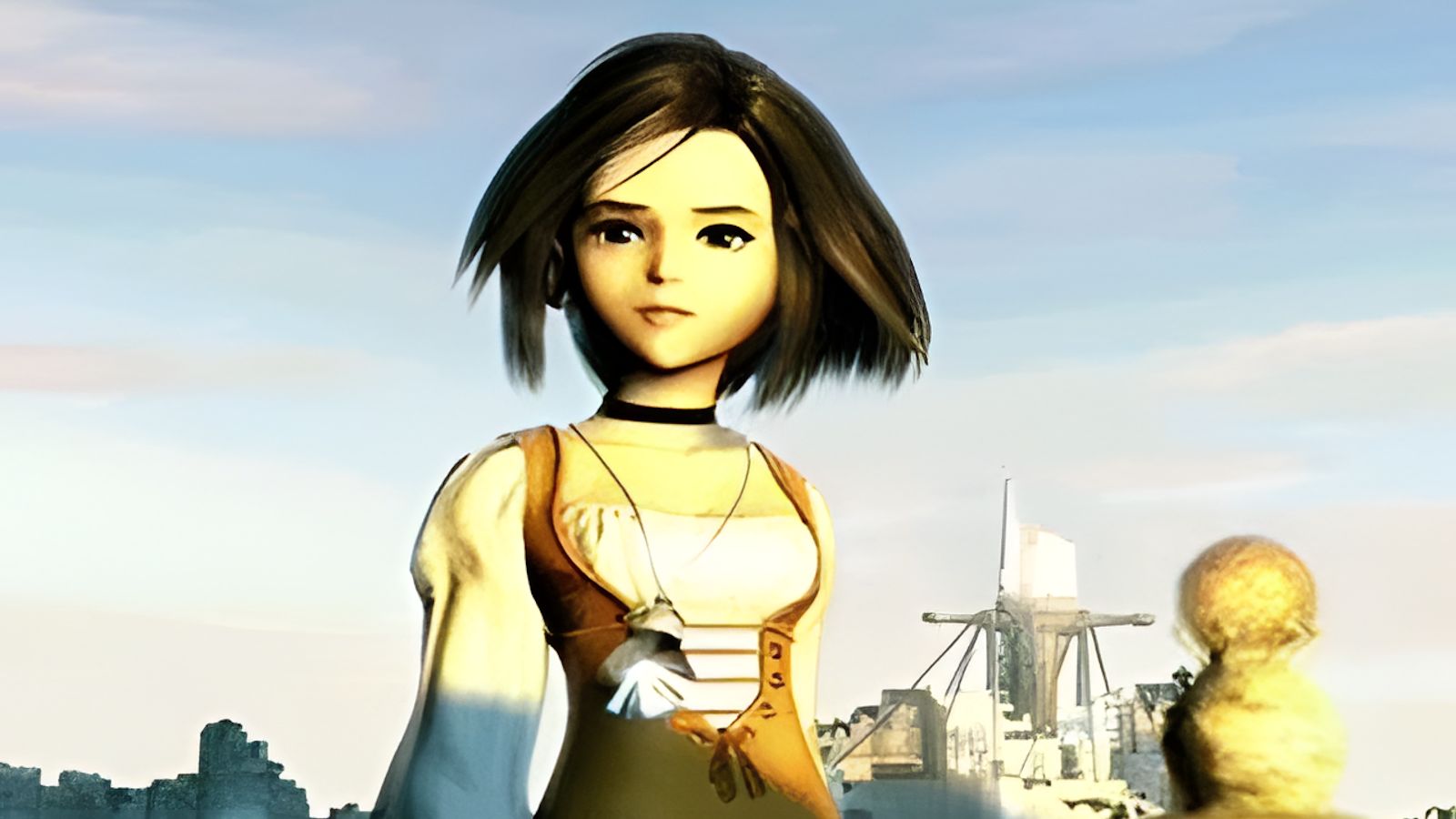
Outside of the social signifiers tied to hair types and styles, hair is also an indispensable storytelling tool in visual media. Artists and directors use hair to convey a character’s experiences and traits at a glance. In Final Fantasy IX, Princess Garnet til Alexandros’ story is paralleled in the way she wears her hair. When her mother dies, she rejects the crown, a decision symbolised by her taking a dagger to her waist-length ponytail. At story’s end, when the world is saved and the mysteries of her past have been answered, Garnet returns to Alexandria to assume the throne. Appropriately, her long hair has grown back.
In an interactive visual medium like video games, especially for the type of immersive blockbuster titles that AAA companies usually produce, hair cannot be an after thought. The player will inhabit the character over the course of dozens of hours of play, the hero’s identity must be clear and authentic. You have to feel their motives and actions are justified not just by the situations the story puts them in, but by the qualities and personality that their clothes and hair signify.
When it comes to video game hair, no one does it better than the boutique digital art studio in Hyderabad, India. Del Walker closed out his Twitter post with a direct shoutout to Naky Solanki and Little Red Zombies: “Him and his team are the 1992 Chicago Bulls of hair for real-time games and no gamers know who he is.”